

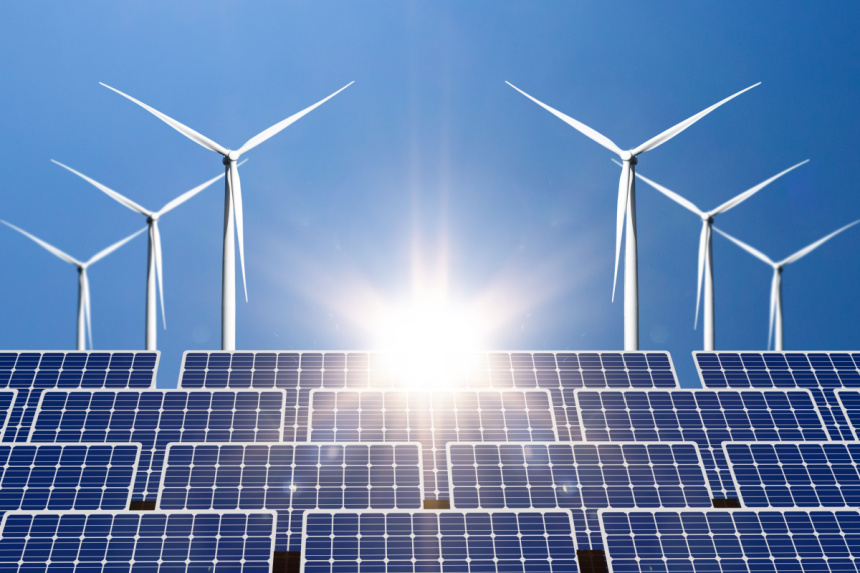
As COP30 in Belém, Brazil, edges toward its conclusion, climate negotiators remain divided on core questions such as whether the world should commit to moving away from fossil fuels at all. At the same time, oil, gas and coal demand remains resilient, strengthening the perception that the global energy transition is stalling. Yet beneath the political noise and short term market signals, investment trends still point in one clear direction: a gradual but persistent shift toward low carbon energy.
This article examines the stalled talks at COP30, the International Energy Agency’s latest scenarios for fossil fuel demand, the rapid expansion of renewable power, and what these developments mean for investors trying to read the long term trajectory of the energy system.
COP30 Deadlock And Shifting Expectations
Ten years after 195 governments signed the Paris Agreement, expectations for a rapid global pivot away from fossil fuels have been tempered. A series of shocks has complicated the picture: energy price spikes after the war in Ukraine, economic strains following the pandemic, and a renewed emphasis on fossil fuel production and use under President Donald Trump. These forces have helped to slow or dilute climate policies in many countries.
At COP30, these tensions are visible in the difficulty of agreeing on language about the future of oil, gas and coal. Some governments insist on phasing down or phasing out fossil fuels, while others argue for continued expansion. The result is a perception that the energy transition is faltering, which risks undermining confidence among investors who must commit capital on multi decade timelines.
IEA Scenarios And The Debate Over Demand
The International Energy Agency’s recent outlook sharpened this debate. In its Current Policies Scenario (CPS), which assumes that existing climate policies are frozen or reversed, the IEA now sees oil and gas demand potentially rising into the 2050s. This reflects a world where political priority for clean energy weakens and efficiency gains fall short of earlier expectations.
Critics argue that CPS is built on doubtful assumptions, including a sharp slowdown in electric vehicle adoption and smaller improvements in fuel efficiency. A more plausible path, they suggest, is the IEA’s Stated Policies Scenario (STEPS). This scenario incorporates both current measures and announced policies that appear economically viable, even if not yet fully enacted.
Under STEPS, coal consumption peaks before 2030. Oil demand increases modestly to around 102 million barrels per day by 2030, then gradually declines as electric vehicles reach more than half of global sales by 2035 and displace roughly 10 million barrels per day of oil use. Natural gas demand levels off after the mid 2030s. In parallel, renewables grow from about one third of global electricity generation today to more than half by 2035 and two thirds by 2050, supported by large scale deployment of solar, wind and battery storage.
Investment Flows Point Toward Clean Energy
Spending patterns across the energy sector align far more closely with STEPS than with CPS. The IEA estimates that total energy investment in 2025 will reach about 3.3 trillion dollars, with two thirds directed to low emission technologies such as renewables, nuclear, battery storage, low carbon fuels and electrification. Solar remains the standout technology, with investment in utility scale and rooftop systems expected to reach 450 billion dollars in 2025.
These capital flows are reshaping the global power mix. Renewable capacity is forecast to double by 2030, adding about 4,600 gigawatts of new capacity, roughly equivalent to the combined existing power capacity of China, the European Union and Japan. Around 70 percent of this additional investment is set to come from fossil fuel importing economies, led by China and Europe.
China in particular has moved decisively. It plans to invest around 630 billion dollars in clean energy in 2025 alone, roughly double the level of a decade ago. The country has also become a major exporter of clean energy equipment, shipping 15 to 20 billion dollars per month in products such as solar panels, batteries and electric vehicles. By contrast, the United States is expected to see a marked slowdown in renewable investment growth after the rollback of many federal clean energy policies, raising questions about policy stability and long term planning.
Implications For Investors
Despite political reversals and slower than hoped progress, the structural drivers of the energy transition remain intact. In many regions, new solar and wind projects, supported by storage and modernized grids, are already cost competitive or cheaper than new fossil fuel generation. Over time, economics are likely to reinforce the shift toward low carbon technologies, even where policy support is uneven.
For investors, the main risk now is not that the transition reverses, but that they misjudge its pace. In the past, some may have overestimated how quickly fossil fuels would be displaced. Today, there is an opposite danger: assuming that high current demand and political pushback mean the transition has stalled for good. Long term capital allocation decisions that ignore the continuing build out of clean energy, electrification and efficiency could prove costly as markets adjust.
Conclusion
The stalled negotiations at COP30 and the IEA’s conservative CPS scenario have fueled a narrative that the energy transition is in retreat. Yet global investment data, technology costs and policy commitments captured in the STEPS scenario suggest a more nuanced reality. The transition is slower and more fragmented than many hoped when the Paris Agreement was signed, but its direction remains clear.
As capital continues to flow into renewables, batteries and low carbon infrastructure, investors are likely to be better served by tracking these financial signals rather than short term political setbacks. The key challenge is to calibrate expectations, recognizing both the persistence of fossil fuel demand in the near term and the powerful structural forces driving the global energy system toward a cleaner mix over the coming decades.