

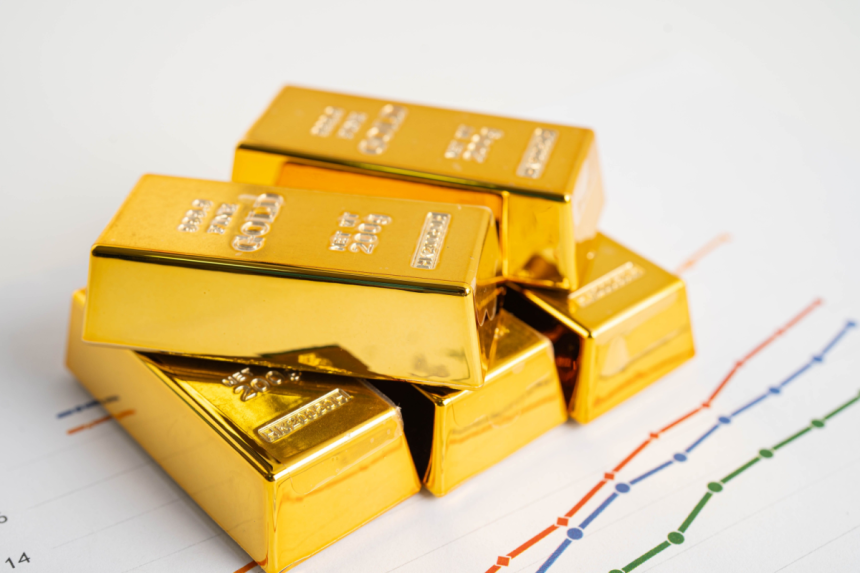
Safe-haven demand fuels historic rally
Gold prices surged to a fresh all-time high above $4,800 on Wednesday, extending a powerful rally as investors sought safety amid renewed tariff threats from the White House and mounting concerns over a global trade war. The move underscores gold’s enduring role as a hedge against geopolitical risk and market instability.
The latest jump follows a blockbuster performance in 2025 and confirms that momentum has carried into 2026. Analysts say a combination of geopolitical tensions, falling real interest rates and a strategic shift away from the U.S. dollar is driving sustained demand for the precious metal.
Bullish forecasts dominate market outlook
Expectations for further gains are growing increasingly optimistic. Analysts surveyed by the London Bullion Market Association project gold prices to exceed $5,000 this year, supported by expectations of lower U.S. real rates, continued Federal Reserve easing and persistent diversification by central banks away from the dollar.
Some forecasts go much further. Julia Du, senior commodities strategist at ICBC Standard Bank, said gold could rise as high as $7,150, highlighting the strength of structural forces underpinning demand.
Institutional and private investors drive demand
Goldman Sachs reiterated its bullish stance, calling gold its highest-conviction trade. The bank expects prices to reach $4,900 by the end of the year, pointing to a notable shift in who is buying the metal.
According to Goldman, central bank purchases were the main driver of gains in 2023 and 2024, but the rally broadened significantly in 2025 as private-sector demand surged. ETF inflows have become a key signal of that trend, with demand coming from private wealth firms, asset managers, hedge funds and pension funds.
Geopolitics remains the defining catalyst
Market strategists argue that the current gold cycle does not resemble a speculative peak. Nicky Shiels, head of metals strategy at MKS PAMP, expects prices to reach $5,400 this year, describing the move as part of a long-term structural shift rather than a short-lived spike.
She noted that while last year’s gains were extraordinary, the broader environment continues to favor gold. Ongoing geopolitical flashpoints, including U.S. actions in Venezuela and Washington’s push to assert control over Greenland, have reinforced investor demand for safe-haven assets.
A secular shift, not a short-term spike
Analysts emphasize that gold’s strength reflects deeper changes in the global financial system. Concerns over trade fragmentation, currency diversification and the strategic importance of critical commodities are shaping long-term investment behavior.
As geopolitical uncertainty shows few signs of easing, many investors see gold not as a speculative trade, but as a core portfolio anchor in an increasingly volatile world.