

Deal with creditors keeps carrier alive
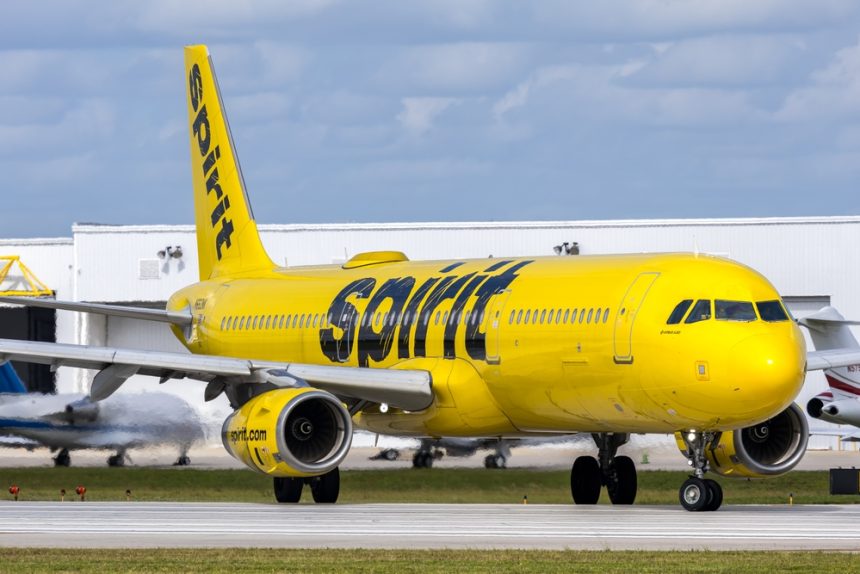
Spirit Airlines has reached an agreement with creditors that will allow the ultra-low-cost carrier to exit bankruptcy protection later this spring or early summer, preserving the airline as an independent company after years of financial turbulence.
The company had faced mounting losses and filed for bankruptcy twice, prompting repeated warnings to investors that there was “substantial doubt” about its ability to continue operating. Under the new agreement, Spirit will restructure its debt and streamline operations in an effort to stabilize its business.
Chief Executive Dave Davis said the airline will emerge “stronger and leaner,” positioning itself to deliver low fares more sustainably in a competitive market.
A smaller footprint in a changed market
The Spirit that exits bankruptcy will be significantly smaller than the version that entered proceedings in November 2024. The airline has sold aircraft and airport gates to generate liquidity and reduce liabilities, while also cutting staffing levels.
Industry data from Cirium indicates that Spirit will operate nearly 40% fewer flights and seat capacity this summer compared with the same period in 2024, prior to its bankruptcy filing. The downsizing reflects both financial discipline and a broader realignment of its network.
Low-cost model under pressure
Spirit built its brand on extremely low base fares paired with add-on fees for services and amenities. However, the airline struggled as travel demand evolved during and after the pandemic. Many passengers gravitated toward carriers offering more comfort and bundled experiences rather than bare-bones pricing.
Even so, Spirit plays an outsized role in the U.S. airline ecosystem. Its aggressive pricing has historically pressured larger carriers such as Delta and United to maintain entry-level fares to remain competitive. Industry analysts have noted that Spirit’s disappearance could have reduced competitive pressure and contributed to higher ticket prices nationwide.
Remaining independent after failed mergers
Unlike some U.S. airlines that were acquired out of bankruptcy and folded into rivals, Spirit will remain an independent operator. Previous attempts to merge were unsuccessful.
In 2022, Spirit initially agreed to combine with Frontier Airlines. That deal collapsed after JetBlue Airways submitted a higher competing bid favored by shareholders. However, the JetBlue acquisition was blocked in early 2024 by a federal judge who ruled that the merger would violate antitrust laws and reduce consumer competition.
With its restructuring nearly complete, Spirit now faces the challenge of proving that a scaled-down version of its ultra-low-cost strategy can generate sustainable profits in a still-evolving travel market.