

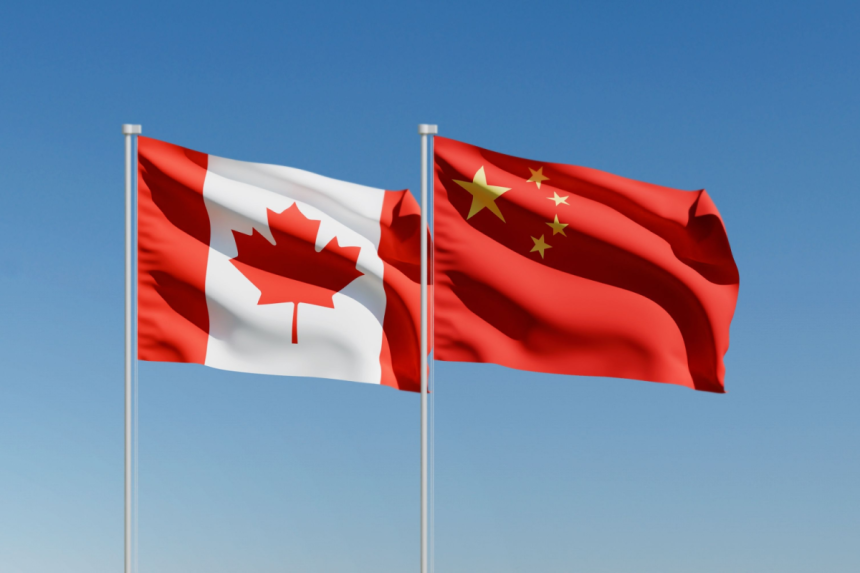
Canada has signaled a major shift in its foreign and trade policy after Prime Minister Mark Carney announced a new strategic partnership with China during a high-level meeting in Beijing. The move reflects Ottawa’s effort to ease long-standing trade tensions, diversify economic ties, and recalibrate its global positioning amid strained relations with the United States.
Resetting Relations After Years of Tension
Carney’s visit marks the first by a Canadian prime minister since 2017, coming after nearly a decade of deteriorating relations between Ottawa and Beijing. Diplomatic ties collapsed following the arrest of a senior Chinese telecom executive in Canada at the request of U.S. authorities, and China’s subsequent detention of two Canadian citizens.
The meeting with President Xi Jinping highlighted a clear departure from the confrontational tone of recent years, as both leaders emphasized cooperation and mutual economic benefit rather than rivalry and suspicion.
Trade Concessions and Market Access
As part of the new partnership, Canada will ease restrictions on Chinese electric vehicles, allowing up to 49,000 units per year to enter the Canadian market at a standard tariff rate. This reverses a previous blanket tariff that had aligned Canada closely with U.S. trade policy.
In return, China is expected to significantly lower tariffs on Canadian agricultural exports, including canola seed, which had faced steep duties that disrupted a multi-billion-dollar market. Other products such as lobsters and peas are also expected to benefit from reduced barriers.
Economic and Strategic Goals
Both sides expressed interest in expanding cooperation across clean energy, agriculture, technology, and natural resources. Canada aims to increase exports to China by 50% by 2030, while encouraging new joint-venture investments, particularly in the automotive and energy sectors.
Carney framed the partnership as a way to strengthen the global multilateral system, which he said has been under strain in recent years. Chinese officials echoed this view, describing the agreement as a foundation for a new type of bilateral relationship.
Balancing China and the United States
The reset comes against the backdrop of worsening Canada–U.S. relations during Donald Trump’s presidency, which saw new tariffs imposed on Canadian goods and repeated rhetoric questioning Canada’s sovereignty. While Carney has previously identified China as a security concern, his government is now prioritizing economic pragmatism and diversification.
The move is likely to be closely watched by Washington, as well as by Canada’s G7 partners, given Beijing’s long-standing efforts to deepen ties with U.S. allies.
Conclusion
Canada’s new strategic partnership with China represents a calculated effort to stabilize trade, revive key export markets, and reduce dependence on a single ally. While challenges remain, the agreement signals a significant realignment in Canadian foreign policy with long-term implications for trade, diplomacy, and global positioning.