

Pakistan’s attempt to position itself as a diplomatic bridge between Iran and the United States has run into a serious setback after Tehran reportedly refused to attend proposed talks with American officials in Islamabad. The breakdown is a blow not only to Pakistan’s mediation ambitions, but also to hopes that a neutral regional actor could still create space for dialogue as the wider crisis becomes more dangerous and more difficult to contain.
The refusal appears to reflect more than a scheduling dispute or a narrow disagreement over process. It points to a deeper collapse in trust and a widening divide between what Washington is demanding and what Tehran is prepared to accept. With U.S. rhetoric growing harsher and Iranian officials rejecting American conditions as unacceptable, the political room for direct engagement has narrowed sharply.
That leaves Pakistan in an uncomfortable position. Islamabad had presented itself as a credible facilitator capable of maintaining contact with both sides while trying to prevent a broader regional war. Instead, it now finds itself confronting the limits of mediation in a conflict that is no longer defined only by diplomacy, but by military escalation, economic disruption, and competing strategic alliances.
Tehran’s refusal undercuts Islamabad’s role
Pakistan’s peace effort had been built on the idea that it could offer a neutral venue and a channel of communication acceptable to both Iran and the United States. Tehran’s decision not to attend the proposed talks therefore strikes directly at the core of that strategy. It suggests that even a carefully positioned intermediary is struggling to overcome the current level of hostility between the two sides.
Iranian officials have reportedly rejected Washington’s conditions outright, making clear that the issue is not merely procedural but substantive. If Tehran sees the proposed terms as fundamentally unacceptable, then the failure of the talks reflects a much deeper diplomatic deadlock than Pakistan may have initially hoped to manage.
For Islamabad, that is politically awkward. The country had invested credibility in the idea that it could help bring the sides together, and the collapse of the initiative now raises questions about how much influence any outside mediator can realistically exert while the conflict remains so militarized.
Trump’s rhetoric has made diplomacy harder
One of the main reasons for the hardening Iranian stance appears to be the increasingly aggressive language coming from President Donald Trump. His warning that Iran could be bombed “back to the Stone Ages” if it does not accept U.S. terms has made compromise more difficult, both strategically and domestically, for Tehran.
In situations like this, rhetoric matters as much as formal conditions. Public threats can narrow a government’s room to negotiate because any concession begins to look like submission under pressure. For Iranian leaders, engaging in talks immediately after such threats would carry serious political costs at home and could be interpreted as weakness at a moment when the state is trying to project resilience.
That dynamic helps explain why the gap in expectations keeps widening. Washington appears to be using maximal pressure to force movement, while Tehran is interpreting that same pressure as a reason to refuse direct engagement. In that environment, even a neutral diplomatic channel becomes difficult to activate.
Pakistan is still trying to keep a door open
Despite the setback, Pakistan has not publicly abandoned its mediation effort. Officials have acknowledged that progress is being obstructed, but they continue to frame their role as one of trying to build conditions for meaningful negotiations rather than forcing an immediate breakthrough. That language suggests Islamabad is trying to preserve its relevance without overstating what it can still achieve.
Pakistan has remained in contact with Tehran, including through a recent call between Iranian President Masoud Pezeshkian and Prime Minister Shehbaz Sharif. Both sides reportedly emphasized trust building, an indication that the diplomatic channel itself is still functioning even if the formal talks with Washington have stalled.
That distinction matters. Failed talks do not always mean failed diplomacy. Pakistan may still see value in keeping communication alive, especially if the military and economic pressures of the conflict eventually push both sides back toward some form of negotiation.
Regional risks are growing faster than diplomacy
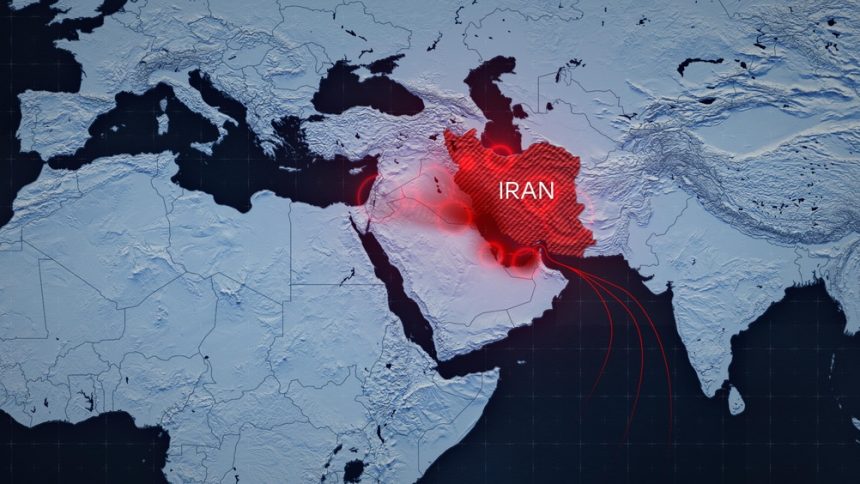
The collapse of the talks comes as the broader war becomes more complex and more dangerous. The conflict, triggered by U.S. and Israeli strikes that reportedly killed Iran’s supreme leader Ali Khamenei, has already expanded beyond a bilateral confrontation. Iranian missile and drone attacks have targeted several Gulf states, increasing fears that the crisis could spiral into a wider regional war involving multiple governments and alliances.
That broader context is especially important for Pakistan. The country is linked to Saudi Arabia through a defense agreement, while also managing tense relations with India and instability along the Afghan border. It has little strategic room for another major regional confrontation, which helps explain why its mediation effort was never just about diplomacy for its own sake. It was also about containing spillover that could directly threaten Pakistan’s own security environment.
Economic pressure is adding to the urgency. Iran’s restrictions on the Strait of Hormuz have disrupted global energy supply and driven oil prices higher, while the limited passage it recently allowed for Pakistani vessels has not translated into wider diplomatic progress. For Islamabad, the failure of talks is therefore not simply a foreign policy disappointment. It is a warning that the crisis is moving faster than the region’s diplomatic mechanisms can currently contain.