
Crude prices jumped sharply on Monday as tensions between the United States and Iran escalated once again, reigniting fears that the fragile pause in the conflict could collapse. The immediate trigger was a new round of attacks and seizures involving commercial shipping around the Strait of Hormuz, one of the most important chokepoints in global energy markets.
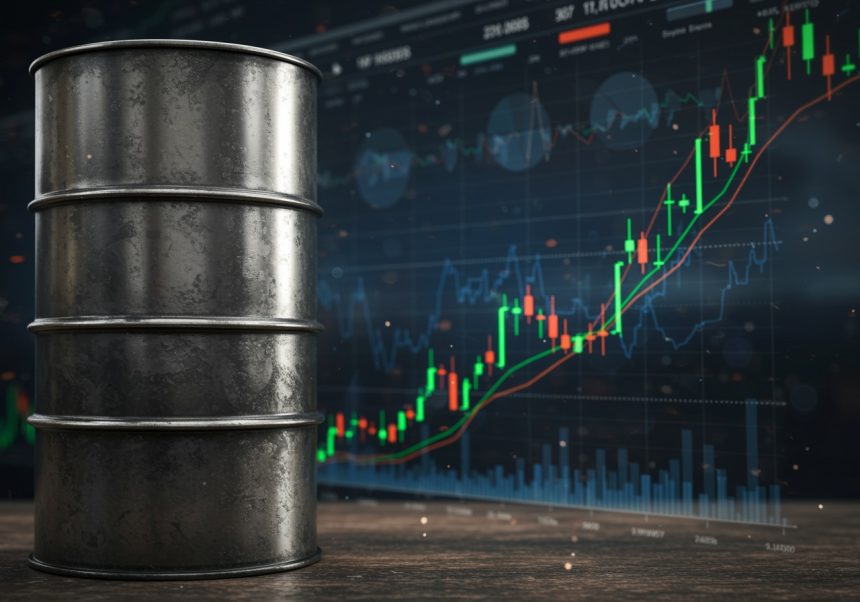
U.S. crude climbed to nearly $89 a barrel, while Brent rose above $95, reflecting how quickly traders are pricing in the risk of renewed disruption. The market had only just started to relax after a brief drop in prices at the end of last week, but that relief has proved short-lived.
The result is another reminder that oil is no longer trading on stable supply expectations. It is trading on military headlines, diplomatic uncertainty and the constant risk that what looks like de-escalation one day could turn into a sharper confrontation the next.
Hormuz Is Once Again Driving The Market
The Strait of Hormuz remains the core of the story because of its central role in the global energy system. Any threat to shipping through that route immediately raises concern about supply, transport costs and inflation.
That is exactly what happened again at the start of the week. The confrontation at sea, involving an Iranian ship and U.S. military action, pushed investors back into a defensive mindset. Once the market sensed that shipping security could deteriorate again, oil prices moved higher almost immediately.
This is why the region remains so economically sensitive. It does not take a full shutdown to trigger panic. It only takes a credible threat to normal movement through the strait.
The Market Had Just Started To Believe In Relief
The latest rebound in oil is especially striking because it comes so soon after a sharp fall. Just days earlier, prices had dropped on hopes that the strait could reopen more fully and that the conflict might be moving toward some kind of diplomatic easing.
That optimism was always fragile, and the weekend events exposed exactly how fragile it was. The market quickly shifted from relief back to anxiety as it became clear that shipping conditions and the ceasefire framework remained far from stable.
In practical terms, traders are being forced to price in two competing possibilities at once: a path toward negotiations and a path back toward deeper conflict. That is what is making the market so volatile.
Diplomacy Looks Increasingly Uncertain
The wider problem is that there is still no clear sense of whether the U.S. and Iran are actually moving toward a durable agreement. Talks had been discussed, but fresh military friction and continued disagreement over the blockade have made the diplomatic picture much more uncertain.
This uncertainty matters because oil markets do not only react to supply in the present. They react to what investors think may happen next. If the expectation is that negotiations are breaking down or becoming harder, the risk premium in oil rises quickly.
That is what appears to be happening now. The latest escalation has made it harder for traders to believe that a stable settlement is close.
Higher Oil Brings Inflation Fears Back
Whenever crude rises this quickly, the concern extends far beyond energy traders. More expensive oil can feed through into transport, manufacturing, food distribution and household fuel costs. In other words, the jump in crude revives broader fears about inflation and the pressure it can place on consumers and businesses.
That is why the market reaction matters for the wider economy. It is not only about what happens in commodity trading. It is about the possibility that another energy shock keeps prices elevated across a range of sectors and complicates the outlook for growth.
The danger is that a geopolitical event in one region ends up tightening financial and economic conditions much more broadly.
The Real Issue Is That Nothing Is Settled
The sharp move in oil is not really about one ship or one weekend incident on its own. It is about the deeper realization that the crisis remains unresolved. The ceasefire is fragile, the blockade is still in place and the flow of traffic through the strait remains uncertain.
As long as that remains true, every new headline has the power to move prices sharply in one direction or the other. That is the environment the market is now operating in: one where even a brief sense of calm can be overturned almost instantly.
For now, the message from oil is straightforward. Traders do not believe the danger has passed, and until the U.S.-Iran conflict shows a clearer route toward resolution, crude will remain highly sensitive to every new sign of escalation.