

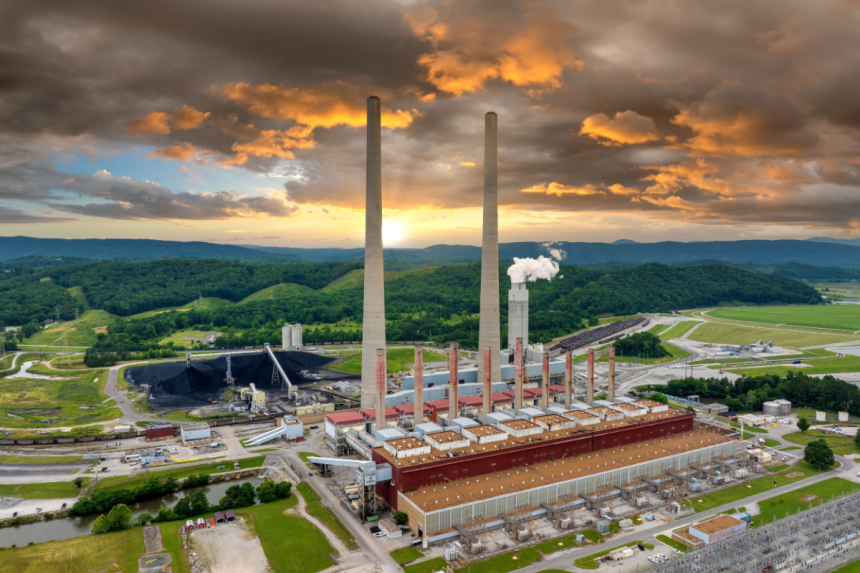
Federal emergency order overrides Washington coal phaseout
CENTRALIA, Wash. — The U.S. Department of Energy under President Donald Trump has issued an emergency order requiring TransAlta to continue operating its coal-fired power plant in Centralia, directly overriding a Washington state law that mandates an end to coal power generation by the close of 2025.
The order compels TransAlta to keep Unit 2 of the Centralia Generating Station available for operation from Dec. 16, 2025, through March 16, 2026. It was issued under Section 202(c) of the Federal Power Act, a rarely used provision that allows federal intervention during energy emergencies.
Washington officials reject emergency justification
State leaders responded sharply, arguing that the federal government is misusing emergency authority to prolong coal use. Governor Bob Ferguson, Attorney General Nick Brown, and Ecology Director Casey Sixkiller said the decision undermines more than a decade of coordinated planning to transition away from coal.
“There’s no emergency here,” the officials said in a joint statement, accusing U.S. Energy Secretary Chris Wright of creating uncertainty in Washington’s power market while increasing pollution and costs. They emphasized that the Centralia plant has already completed most of its shutdown process, with workers reassigned and coal supplies depleted.
A decade-long coal exit disrupted
The Centralia coal plant has been phasing out operations since 2011 under an agreement between the state, TransAlta, and environmental groups. The shutdown was a cornerstone of Washington’s broader clean energy strategy and a symbol of its transition away from fossil fuels.
Under the state’s Clean Energy Transformation Act, utilities must eliminate coal-fired electricity by the end of this year, reach greenhouse gas neutrality by 2030, and provide fully emissions-free electricity by 2045.
Federal push to extend coal operations nationwide
The Centralia order is part of a broader federal effort to extend the life of coal plants across the United States. Similar emergency directives have recently been issued for facilities in Michigan and Pennsylvania, signaling renewed support for fossil fuels at the federal level.
The Department of Energy has justified these actions by citing grid reliability and energy security concerns, though critics argue those claims lack supporting evidence and conflict with state-level energy planning.
Natural gas conversion now uncertain
Before the federal order, TransAlta had announced plans to partner with Puget Sound Energy to convert the Centralia site into a natural gas facility, a move aligned with Washington’s clean energy goals. The emergency mandate now places that transition in question.
In a statement, TransAlta confirmed receipt of the order and said its subsidiary, TransAlta Centralia Generation LLC, is required to keep Unit 2 available for operation for 90 days, through mid-March 2026.
Energy policy clash intensifies
The dispute highlights a growing clash between federal energy policy under the Trump administration and state-led climate initiatives. For Washington officials, the order represents a setback not only for emissions reduction but also for regulatory certainty after years of negotiated agreements.
As legal and political tensions mount, the future of coal power in Washington now depends on whether the federal government maintains its emergency stance or faces successful challenges from the state.