

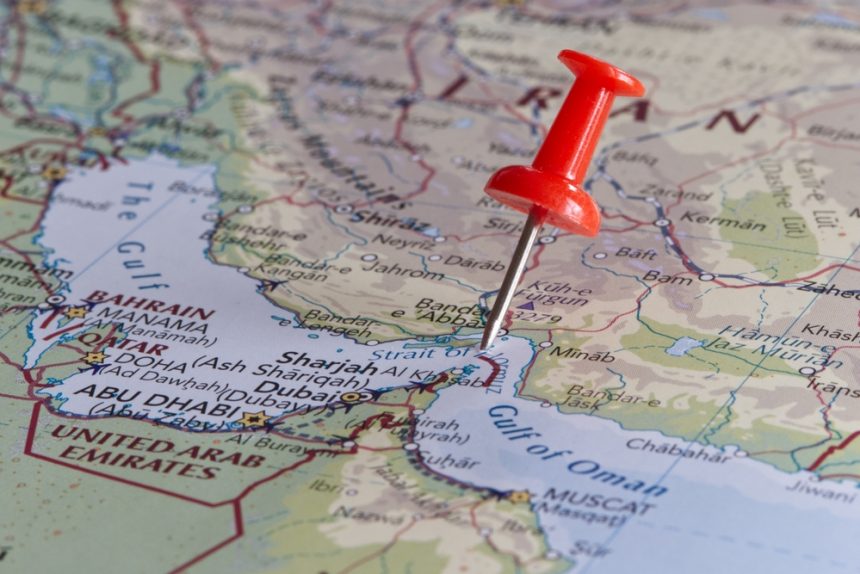
The war involving Iran has exposed a hard truth about global energy trade: there is no easy substitute for the Strait of Hormuz. As shipping through the waterway has been disrupted, attention has turned to pipelines and other possible export routes across the Middle East. But while a few alternatives exist, none comes close to fully replacing the volume that normally moves through the strait.
That is what makes the current crisis so significant. The region does have some infrastructure that allows oil to bypass Hormuz, especially in Saudi Arabia and the United Arab Emirates, but these routes are limited by capacity, geography, security risks and incomplete development. In other words, the Gulf is not without options, but it is far from having a full backup system.
The result is an energy map that looks more vulnerable than many policymakers would like to admit. When Hormuz is disrupted, the world quickly discovers how much of the global oil and gas trade still depends on a single narrow passage.
Saudi Arabia Has The Biggest Existing Workaround
The most important alternative route currently available is Saudi Arabia’s East-West pipeline, which runs from the Gulf to the Red Sea port of Yanbu. It is by far the largest functioning bypass in the region and gives the kingdom a way to reroute a significant part of its crude exports without relying on Hormuz.
That makes it strategically crucial. If any country in the Gulf has a serious pipeline-based escape valve, it is Saudi Arabia. But even this route has limits. Effective export volumes depend not only on the pipe itself, but also on available tanker capacity, terminal logistics and the security of onward shipping lanes.
And those onward routes are not risk free either. Cargo leaving Yanbu still has to navigate broader maritime dangers, including threats around the Red Sea and Bab el-Mandeb.
The UAE Has A Smaller But Important Option
The United Arab Emirates also has a meaningful bypass route through the Habshan-Fujairah pipeline, which links onshore Abu Dhabi fields to the port of Fujairah on the Gulf of Oman, outside Hormuz. This line gives the UAE a direct way to move part of its crude exports without relying on the strait.
That has obvious strategic value, especially in times of heightened tension. But its scale is much smaller than the flows that normally pass through Hormuz as a whole, and its usefulness can still be undermined by attacks on surrounding infrastructure or export facilities. The pipeline helps, but it does not solve the wider regional bottleneck.
In practical terms, Fujairah is one of the most useful existing alternatives in the Gulf, but it is still only a partial release valve in a much larger supply crisis.
Iraq’s Northern Route Helps, But Only At The Margin
Iraq has another outlet through the Kirkuk-Ceyhan pipeline to Turkey’s Mediterranean coast. That route matters because it offers a non-Hormuz export path, but it remains limited compared with the scale of Gulf production and has also faced long-running political and operational disruptions.
The route has only recently restarted after a lengthy shutdown, and current flows remain far below the volumes that would be needed to transform the regional export picture. It is useful, but not decisive. Iraq’s main southern production base still depends heavily on Gulf access, which means the northern line cannot act as anything like a full substitute.
That makes Kirkuk-Ceyhan more of a supporting route than a true strategic answer to the current disruption.
Iran Has Its Own Partial Escape Route
Iran may also have some ability to bypass Hormuz through the Goreh-Jask pipeline and the Jask terminal on the Gulf of Oman. In theory, that route gives Tehran its own outlet beyond the strait. In practice, however, the infrastructure is not yet fully mature and remains far from a complete solution.
The significance of Jask is therefore more strategic than transformational. It shows that Iran has long understood the danger of overdependence on Hormuz and has tried to build an alternative. But the route is still too limited to remove the broader vulnerability that defines the current crisis.
For now, it is best seen as an emerging backup rather than a fully operational game changer.
Most Other Ideas Are Still Only On Paper
Beyond the existing pipelines, several other bypass ideas have been discussed for years. Among them are a Basra-to-Oman route, a Basra-to-Aqaba pipeline in Jordan and even a canal linking the Gulf more directly to the Gulf of Oman. These projects all reflect the same strategic impulse: reduce dependence on Hormuz.
But they also show how hard that goal is to achieve. Most of these proposals remain stalled by cost, politics, security concerns or engineering complexity. Some have existed in discussion form for decades without moving meaningfully closer to completion.
That matters because it reveals a deeper structural reality. The region has long known Hormuz was a vulnerability, yet building a true alternative has proved so difficult that the dependence remains largely intact.
The Core Problem Is Scale
The central issue with every bypass option is simple: scale. Even when existing routes are added together, they still cannot fully absorb the volume of oil and gas that usually passes through Hormuz. That means alternative infrastructure can reduce some pressure, but it cannot neutralize the crisis.
This is why markets react so sharply whenever shipping through the strait is disrupted. Traders understand that partial rerouting is possible, but only up to a point. Once that limit is reached, the world is still left with a major supply shock and all the economic consequences that come with it.
So while pipelines and proposed corridors matter, none of them changes the basic fact that Hormuz remains the single most important oil chokepoint on the planet.
The Crisis Has Laid Bare A Strategic Weakness
The current disruption has not created the Gulf’s dependence on Hormuz. It has simply exposed it more clearly. Saudi Arabia, the UAE, Iraq and Iran all have some degree of flexibility outside the strait, but not enough to fundamentally redraw the energy map in the middle of a crisis.
That is the real lesson of the moment. Alternative routes exist, but they are fragmented, vulnerable and insufficient relative to the scale of what Hormuz normally carries. The region has backups, but not a replacement.
For the global economy, that means the same conclusion keeps returning: whenever Hormuz is in trouble, the world remains in trouble with it.