

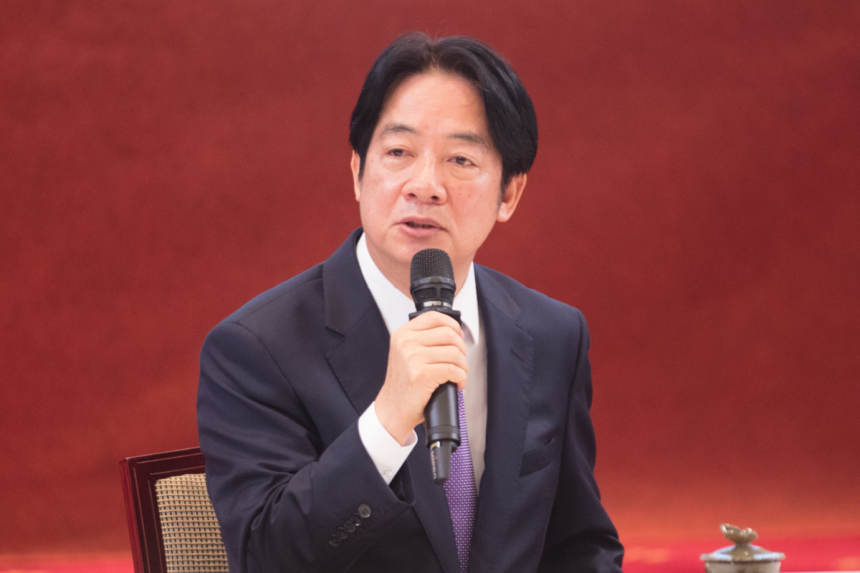
Taiwan President Lai Ching-te publicly signaled support for Japan this week as diplomatic tensions between Tokyo and Beijing intensified. China is expected to halt imports of Japanese seafood following remarks by Japan’s new prime minister suggesting possible military involvement if China attacked Taiwan. Lai’s social media post featuring Japanese-sourced sushi quickly became a symbolic gesture of solidarity at a moment of rising regional strain.
Lai’s Public Gesture and Its Message
On Thursday, President Lai shared photos on Facebook and Instagram showing himself eating sushi made with ingredients from both Taiwan and Japan. In his caption, he encouraged citizens to enjoy Japanese cuisine, framing the moment as a reflection of “firm friendship” between the two partners. The sushi plate included Taiwanese cuttlefish, Japanese yellowtail from Kagoshima, and scallops from Hokkaido, highlighting the intertwined trade relationship.
Lai’s message came after Tokyo officials revealed Beijing’s intent to suspend Japanese seafood imports. The move follows rising friction since Japan’s prime minister suggested that Japan might not stay neutral in a conflict involving Taiwan and China.
Taiwan Condemns Beijing’s Pressure Tactics
Taiwan’s foreign minister, Lin Chia-lung, criticized China’s response, calling it part of a broader pattern of economic coercion and intimidation. Similar import bans have previously targeted Taiwanese pineapples and fish, actions Taipei views as attempts to apply political pressure.
Lin urged Taiwanese citizens to support Japan by increasing tourism and purchasing more Japanese products. He emphasized the importance of countering what he described as Beijing’s “bullying behavior” with stronger regional cooperation.
China Reaffirms Its Stance on Taiwan
Beijing dismissed Lai’s gesture, with foreign ministry spokesperson Mao Ning reiterating that Taiwan is viewed as an inseparable part of China. She argued that public displays by Taiwan’s leadership cannot alter what China considers an established fact.
China has not ruled out using force to take control of Taiwan, while Taiwan’s democratically elected government insists only its people can determine the island’s future. The current diplomatic flare-up adds further weight to ongoing regional security concerns.
Taiwan–Japan Relations in Context
Although Japan and Taiwan maintain no formal diplomatic ties, their relationship remains close, shaped by deep cultural, economic and historical links. Japan governed Taiwan from 1895 until 1945, and today the two sides maintain strong commercial and societal connections.
Their proximity — just over 110 kilometers at the closest point — reinforces strategic alignment, particularly as both face increasing pressure from Beijing. Lai’s post reflects this evolving partnership and underscores how regional cooperation is becoming more visible in response to China’s assertiveness.
Conclusion
The diplomatic friction between China and Japan has placed Taiwan in a sensitive position, but President Lai’s public show of support highlights a deeper strategic message. As Beijing continues to apply economic and political pressure, Taipei and Tokyo are signaling a willingness to strengthen ties. The gesture may be small, but it comes at a moment when symbolism matters, especially in a region navigating rising geopolitical tensions.