

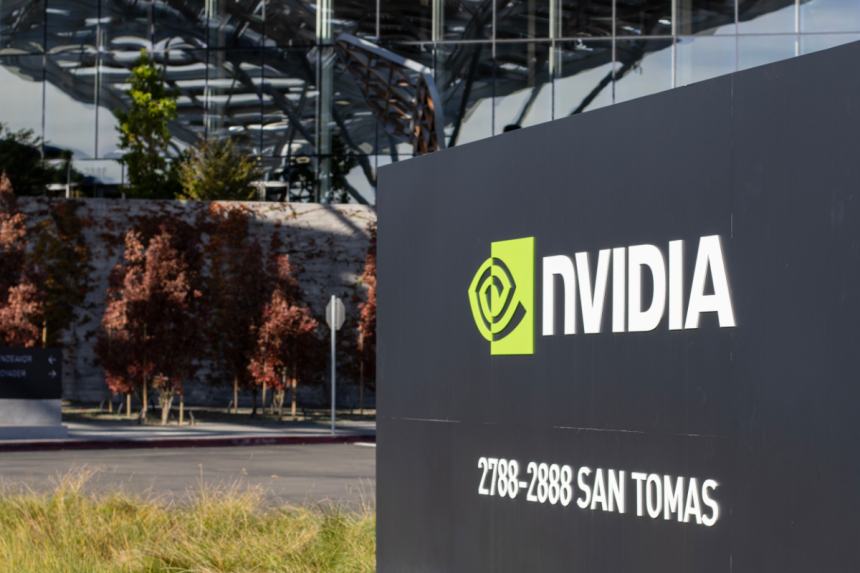
U.S. eases limits on Nvidia while China races to close the gap
President Donald Trump announced this week that the U.S. will allow Nvidia to sell its H200 AI chip in China, marking a partial reversal of export limits imposed in late 2022. The decision gives Nvidia access to one of its largest markets again, though Washington will take a 25% cut of future sales. Nvidia had warned that strict export bans were strengthening China’s domestic chip industry and eroding America’s lead in advanced AI hardware.
The H200 is a substantial upgrade over Nvidia’s previously approved H20. However, Nvidia’s Blackwell line — which offers up to 30× more performance, according to the Institute for Progress — remains prohibited from entering China. Nvidia says keeping Blackwell out of China has not prevented Chinese competitors from advancing and could hinder U.S. dominance in AI computing.
Huawei closes the gap with aggressive hardware strategy
Huawei remains Nvidia’s biggest rival inside China. Its Ascend 910C chip trails the H200 in raw compute and memory bandwidth, yet within the boundaries of what China can legally access, Huawei has an edge. According to reporting on Bernstein Research, the older Ascend 910B delivers more than double the total processing performance of Nvidia’s restricted H20.
Beyond individual chips, officials say Huawei has rapidly built large clustered AI systems capable of rivaling Nvidia’s platforms. White House evaluations reportedly found Huawei’s newer systems performing on par with Nvidia’s NVL72 — a configuration built on Nvidia’s top tier Blackwell GPUs, which are banned from export.
The result: Trump’s decision reportedly stems from a belief that Huawei’s capabilities are already strong enough to compete, weakening the rationale for keeping Nvidia’s H200 out of Chinese markets.
China’s AI chip ecosystem expands: Baidu, Cambricon, Alibaba
Huawei is not alone in the race. Baidu has become a major force through Kunlunxin, the chipmaker in which it holds a majority stake. China Mobile invested roughly $139 million, and Baidu unveiled a roadmap that includes the Kunlun M100 in 2026 and M300 in 2027. Baidu’s shares have risen about 50% this year.
Cambricon Technologies has surged nearly 500% over the past year after Beijing encouraged institutions to avoid Nvidia’s H20 processors. Bloomberg reports that Cambricon plans to triple its AI chip production in 2026. Alibaba, meanwhile, is developing new in house chips of its own, signaling increasingly diversified domestic competition.
Nvidia still leads — but faces pressure from both policy and competitors
Performance wise, Nvidia remains far ahead of global rivals. However, Bloomberg reports that Chinese entities have acquired Blackwell generation chips through a gray or black market, raising questions about the effectiveness of export controls. At the same time, Chinese regulators are reportedly restricting access to the newly approved H200s, requiring companies to demonstrate why domestic chips are insufficient.
According to analysts, demand for H200s unquestionably exists inside China — the barrier is political rather than technological. Companies would buy them immediately if both governments permitted full access.
The broader picture is clear: Nvidia still defines the upper bound of AI performance, but China’s self sufficiency drive has accelerated dramatically. Huawei, Baidu, Cambricon and Alibaba are strengthening their capabilities faster than anticipated, narrowing the gap and reshaping the global AI hardware landscape.