

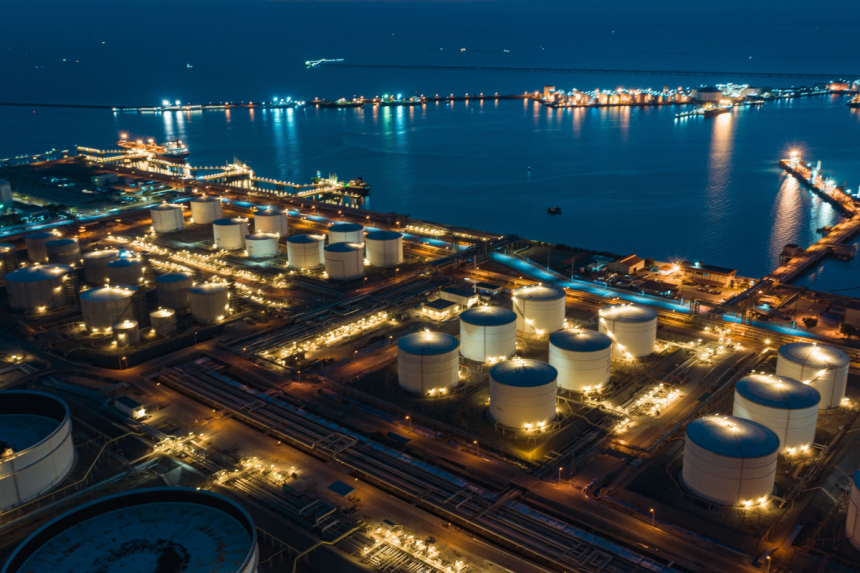
US plans major role in reviving the world’s largest oil reserves
President Donald Trump said the United States will take control of Venezuela’s vast oil reserves and invite American energy companies to invest billions of dollars to restore the country’s severely damaged oil infrastructure.
Venezuela holds an estimated 303 billion barrels of proven crude reserves, making it the largest oil reserve holder in the world. Despite this enormous potential, years of underinvestment, sanctions, and infrastructure decay have left production at a fraction of its historical capacity.
A long road back for Venezuelan oil
Trump said major US oil companies would be tasked with rebuilding pipelines, refineries, and export facilities that have gone largely untouched for decades. Venezuela’s state oil infrastructure has not seen major upgrades in roughly 50 years, and restoring peak production would require tens of billions of dollars in investment.
Even with immediate access and funding, industry experts caution that bringing Venezuelan oil back to full capacity would take years due to the scale of deterioration and technical challenges involved.
Limited short-term impact on oil prices
Despite the size of Venezuela’s reserves, the country currently produces about one million barrels of oil per day, representing less than one percent of global supply. That limits the immediate effect any intervention would have on oil prices.
Global oil markets have remained relatively stable amid oversupply concerns, with production increases from other exporters offsetting Venezuela’s decline. As a result, any short-term price reaction is expected to be modest unless instability spreads or production disruptions worsen.
Why Venezuelan crude matters
Venezuelan oil is heavy and sour, a type of crude that requires specialized refining equipment but is essential for producing diesel, asphalt, and industrial fuels. Many US refineries were originally built to process this type of crude and operate more efficiently when supplied with it.
By contrast, US oil production is dominated by lighter crude, which is less suitable for certain industrial products. Restoring access to Venezuelan oil could improve refinery efficiency and ease tight diesel markets.
Strategic implications for the global market
If US companies are able to return and rebuild Venezuela’s oil sector, the country could eventually emerge as a significant supplier again. That could add long-term supply to global markets and help stabilize prices, though meaningful increases would likely take five to ten years.
Market analysts caution that expectations may outpace reality, with perceptions of rapid recovery likely exceeding what is technically and politically achievable in the near term.
Uncertainty remains
The ultimate impact on oil prices will depend on whether the transition remains stable and whether infrastructure projects can proceed without disruption. Investors are likely to watch for signs of unrest, policy reversals, or delays that could undermine confidence.
For now, the announcement signals a potential shift in US energy strategy and a renewed focus on leveraging Venezuela’s resources, but the true effect on global oil markets will unfold gradually rather than overnight.