

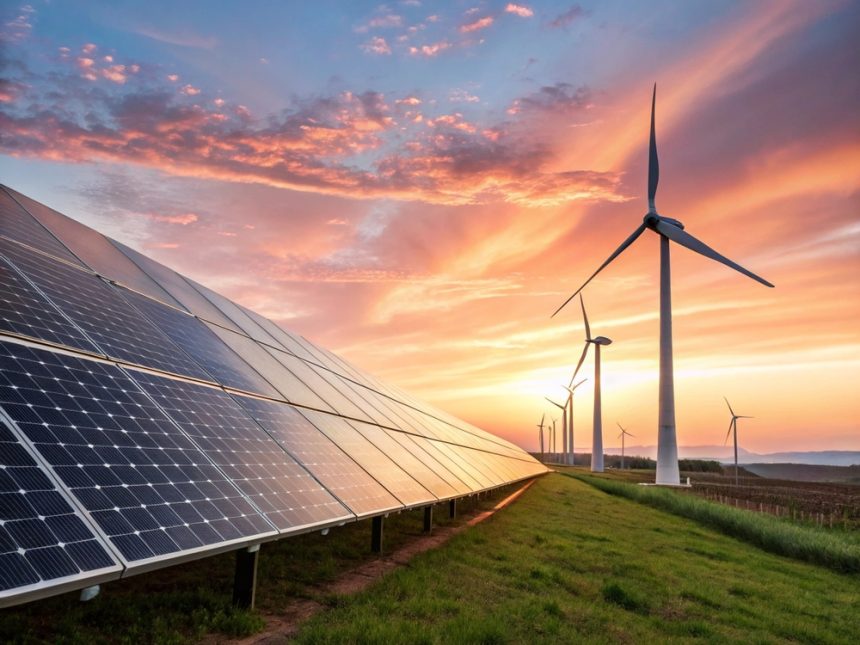
Households across Great Britain may soon be encouraged to use more electricity at very specific times of day, not to conserve the grid, but to help absorb a growing surplus of renewable power. Under new plans, consumers could be offered very cheap or even free electricity when solar panels and wind farms are generating more power than the system can easily handle.
The idea marks an important shift in how the electricity system is managed. For years, off-peak tariffs have encouraged people to use power when demand is lower. Now the grid operator wants to go a step further by actively nudging households to switch on appliances, charge electric vehicles or run other energy-intensive tasks when the country is producing unusually high volumes of green electricity.
This matters because Britain’s renewable output is rising so quickly that, at certain moments, the grid risks having more low-carbon electricity than it can comfortably move around or use. Instead of paying generators to switch off, the system increasingly wants consumers to soak up that excess power.
Consumers Could Get Cheap Power At Key Moments
The new approach would work through energy suppliers, which could offer their customers sharply reduced prices or even free electricity during specific windows when the grid is expected to have a surplus. In practical terms, this could mean households being encouraged to run washing machines, dishwashers or EV chargers when conditions are especially sunny or windy.
Many consumers are already familiar with time-based electricity pricing, especially those on off-peak tariffs. What changes here is the purpose. This would be the first time the system operator uses flexible household demand in such a direct way to help balance the grid itself.
That makes the proposal more than a consumer pricing tweak. It is a sign that the energy system is becoming more dynamic and more dependent on demand shifting in response to renewable generation patterns.
The Grid Wants To Avoid Paying Wind And Solar Farms To Switch Off
One of the strongest reasons behind the plan is cost. When electricity demand is too low and renewable generation is too high, the grid can end up paying wind and solar producers to reduce output. Those curtailment costs do not disappear. They are ultimately passed on through consumer bills.
If households and businesses can be persuaded to use more electricity at the right time, the system operator may be able to reduce those payments and make better use of the power already being generated. In theory, that could ease pressure on bills while also improving the efficiency of the renewable system.
In other words, using more electricity at the right moment may actually help the country waste less clean power and spend less money managing the mismatch between supply and demand.
A Record Renewable Summer Could Test The System
The timing is important because Britain is heading into what could be a landmark summer for renewable generation. Recent weeks have already produced new records for solar and wind output, and there is growing expectation that parts of the summer could bring periods when the grid runs entirely on zero-carbon electricity.
That is an important milestone, but it also creates new operational pressures. On bright and breezy days, especially at weekends when power demand is often softer, parts of the system could become overloaded with renewable electricity. The risk is not that the country lacks supply, but that it has too much of it in the wrong places at the wrong times.
This is one of the paradoxes of the energy transition. Success in building renewable capacity creates a new challenge: learning how to use abundant clean electricity more flexibly and intelligently.
Households Are Being Drawn Into Grid Management
The proposal also shows how ordinary consumers are becoming more central to the way the electricity system functions. In the past, grid balancing was largely a matter for large power stations and industrial users. Increasingly, however, homes with smart meters, flexible tariffs and electric vehicles are becoming part of the balancing toolkit.
That trend is likely to deepen over time. As more households adopt EVs, heat pumps and other electrified technologies, their collective ability to shift consumption will become much more valuable. The same is true for businesses that can increase their usage at certain times in return for lower power prices.
The long-term direction is clear: a cleaner grid will also need to be a more responsive grid, and that means consumers will play a bigger role in stabilising it.
The Summer Outlook Is Better For Power Than For Bills
There is, however, a wider economic backdrop that complicates the story. Britain may have abundant renewable generation this summer, but households are also facing rising energy costs, with the government’s dual-fuel cap expected to climb sharply from July. That means offers of discounted electricity could arrive just as many families are looking for ways to manage higher bills.
At the same time, gas supply for the summer appears secure, with Britain expected to rely on domestic and Norwegian production alongside imports from the global LNG market. Even so, the broader gas market remains under pressure following disruption linked to the Middle East conflict, and that could become more serious later in the year if tensions persist.
For now, the message is mixed but striking. Britain may soon have so much renewable electricity at certain times that consumers will be encouraged to use more, not less. In a power system being reshaped by wind and solar, the cheapest electricity of the future may be the electricity used exactly when nature is producing it most abundantly.