

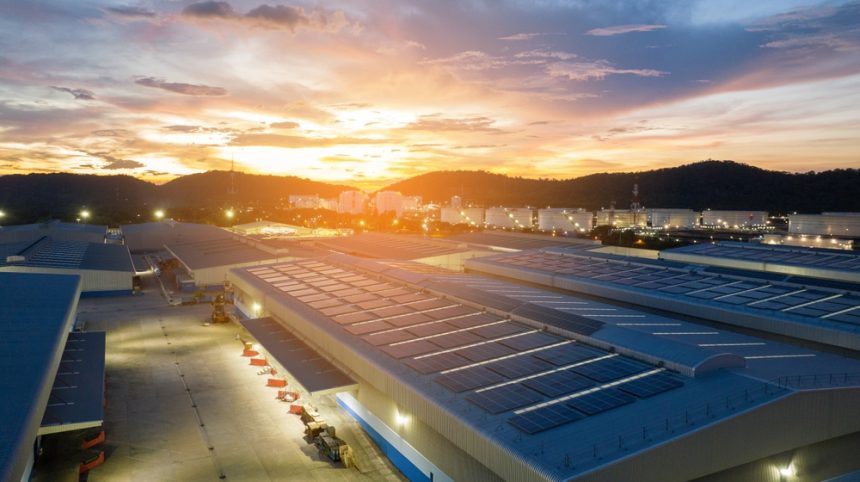
Solar energy has gone from a niche technology to one of the most powerful forces in the global electricity system, and it has done so faster than almost anyone predicted. Once associated mainly with calculators, satellites, and remote off grid locations, solar panels are now delivering some of the cheapest electricity in the world and reshaping how countries think about power, transport, and heating.
The scale of that shift is striking. Global solar capacity rose from 228 gigawatts in 2015, when it supplied about 1% of the world’s electricity, to 759 gigawatts in 2020, covering roughly 3% of demand. By 2025, estimates put global capacity at 2,919 gigawatts, enough to provide around 10% of the world’s energy, slightly above nuclear power’s 9% share. If current growth continues, global solar capacity could reach 9,000 gigawatts by 2030 and cover more than 20% of world energy demand.
That trajectory matters because it changes the terms of the global energy debate. Solar is no longer a promising supplement waiting for its breakthrough. It is already a major power source, still growing rapidly, and increasingly central to the economics of the energy transition.
China dominates as Europe and the US expand
China remains the clear global leader in solar deployment. In 2025 alone, the country installed 315 gigawatts of new solar capacity, bringing its total to around 1,300 gigawatts. More than 80% of all solar panels are now produced in China, giving it a commanding position not only in installation but also in manufacturing. According to the data cited in the source material, solar now provides 11% of China’s electricity, while the share of coal in the country’s power mix has dropped from 70% a decade ago to 56%.
The European Union ranks second, with 406 gigawatts of installed solar capacity. Across the bloc, solar covers roughly 13% of electricity demand, while coal has fallen to 9%, down sharply from about a quarter of generation in 2015. Countries such as Greece, Cyprus, Spain, and Hungary now generate more than 20% of their electricity from solar, while Germany, despite its more limited sunlight, reaches 18%. Germany leads Europe in installed solar capacity with 119 gigawatts, followed by Spain with 56 gigawatts.
The United States remains in third place globally with 267 gigawatts of solar capacity, enough to meet about 8% of total electricity demand. That marks a major increase from just 1% in 2015. Over the same period, coal’s share of U.S. electricity generation has fallen from 34% to 17%, showing that even amid shifting political support, solar has continued to alter the country’s energy mix.
Emerging markets are accelerating adoption
The expansion is not limited to the largest advanced economies. India now ranks fourth in the world with 136 gigawatts of solar capacity and produces about 8% of its electricity from solar despite the vast scale of demand created by its population of 1.45 billion. Japan follows with 103 gigawatts, supplying around 11% of its electricity needs.
Other countries are also making significant gains. Brazil now generates roughly 10% of its electricity from solar and, together with hydropower, wind, and biomass, obtains 88% of its power from renewable sources. Pakistan and South Africa have also seen rapid growth. In 2015, each produced less than 1% of their electricity from solar photovoltaic systems. A decade later, that figure has climbed to 20% in Pakistan and 10% in South Africa.
These examples are important because they show solar is not confined to wealthy countries with large subsidy programs. Falling equipment costs and easier deployment have made it viable across a wide range of economic and climatic conditions, allowing developing and middle income economies to use it as both a decarbonization tool and a way to strengthen domestic energy supply.
Costs have fallen enough to change the equation
One of the biggest reasons for solar’s rise is cost. Improved efficiency and mass production have cut prices by roughly 90%, turning solar into the cheapest form of electricity in many parts of the world. In sunny regions, utility scale solar parks can now generate power for about 1 euro cent, or roughly 1 U.S. cent, per kilowatt hour. In Germany, the cost is estimated at 4 to 5 euro cents per kilowatt hour.
Rooftop solar is often even more attractive for households because it can undercut retail power prices significantly. In many European countries, generating electricity from rooftop panels now costs less than half the average price of grid electricity. Adding battery storage raises the cost by another 2 to 3 cents per kilowatt hour, but even then solar can remain highly competitive compared with conventional sources.
The contrast with fossil fuels and nuclear is stark. According to the data cited from Germany’s Fraunhofer Institute for Solar Energy Systems, nuclear power currently costs between 14 and 49 euro cents per kilowatt hour, coal between 15 and 29 cents, and natural gas between 15 and 33 cents. That gap explains why solar is not just growing because of climate policy. It is increasingly winning on price.
Solar is reshaping transport, heating and future energy systems
The impact of cheap solar is spreading beyond electricity generation itself. In 2024, new power capacity added to the global grid totaled 632 gigawatts, and 72% of that came from solar alone. Wind followed with 18%, while gas, coal, hydropower, and nuclear made up much smaller shares. The direction of travel is becoming harder to ignore.
Low cost solar is also changing how households heat homes and power vehicles. Electric vehicles can be far cheaper to operate when charged with rooftop solar, and heat pumps typically offer lower heating costs than oil or gas systems, particularly when paired with self generated electricity. In the European Union, households can often save more than 30% on heating bills with heat pumps, and even more when solar panels supply part of the power.
Looking ahead, the challenge will be infrastructure. As electric vehicles, heat pumps, and digital systems expand, global electricity demand is expected to more than double by 2050. That will require larger power grids, more battery storage, and smarter digital coordination between electricity generation and consumption. Solar has already proven it can scale faster than forecasts once imagined. The next question is whether grids, storage, and digital systems can grow quickly enough to support a world in which solar becomes the dominant energy source.