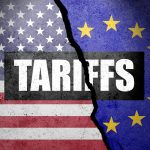

The United States opened forced labor trade investigations into 60 economies on Thursday, widening a fast moving enforcement and tariff strategy a day after launching a separate set of Section 301 probes into 16 trade partners over industrial overcapacity.
What the U.S. Is Investigating
The new actions are being conducted under Section 301(b) of the Trade Act of 1974 and focus on whether foreign governments have failed to curb imports of goods produced with forced labor. The United States Trade Representative said the list includes major partners such as China, the European Union, India and Mexico, and expands scrutiny to additional economies including the United Kingdom, Brazil and Russia.
U.S. Trade Representative Jamieson Greer said the probes will examine whether governments have taken sufficient steps to ban forced labor goods from entering their markets, and how failures to eradicate the practice affect U.S. workers and businesses. Section 301 can serve as a pathway to impose tariffs without new congressional authorization, a tool the first Trump administration used heavily, especially against China.
Plan B After the Court Ruling
The investigations arrive after the U.S. Supreme Court invalidated many of President Donald Trump’s reciprocal tariffs, ruling the president exceeded his authority. The administration responded by putting in place a 10% global tariff under Section 122 of the Trade Act of 1974, while signaling it could rise to 15%.
Trade watchers view the rapid expansion of Section 301 activity as a substitute route to recreate parts of the prior tariff architecture. Wendy Cutler of the Asia Society Policy Institute described the approach as the administration’s near term alternative after the reciprocal tariff setback.
Feasibility Questions and Partner Blowback
The scale of the forced labor probes is drawing criticism on process and targeting. The USTR said it will hold hearings from April 28 to May 1, a timeline Deborah Elms of the Hinrich Foundation called unrealistically short given the breadth of economies under review.
Experts also warn the parallel Section 301 track on industrial overcapacity could weaken U.S. coalition building. Cutler argued that expanding the overcapacity investigation to many partners risks undercutting the cooperation needed to address what she called the core global overcapacity challenge, China. Elms questioned the logic of targeting the European Union, which has its own forced labor framework, while leaving out other jurisdictions with weaker enforcement records.
China Timing and the Paris Talks
The new probes land just before a planned meeting in Paris between U.S. Treasury Secretary Scott Bessent and Chinese Vice Premier He Lifeng. China’s commerce ministry confirmed talks scheduled for March 14 to March 17, widely seen as groundwork for a potential Trump and Xi Jinping summit.
Wang Huiyao of the Center for China and Globalization said launching investigations ahead of the expected summit sends the wrong signal, urging both sides to focus on cooperation. A Chinese commerce ministry spokesperson rejected the framing of China’s industrial output as unfair excess capacity and urged negotiation. On the forced labor probes, China said it was assessing the investigations.
Former U.S. trade negotiator Stephen Olson said China will likely use the Paris meeting to register displeasure, but he did not expect the probes alone to derail summit preparations.